2026-02 posts

Beneath Hemingway’s spare, precise prose, you can sense something deeply human — a restless soul hungry for recognition, straining toward self-fulfillment, yet never quite able to break free from its own circling thoughts. In The Old Man and the Sea, Santiago pushes himself to the edge of human endurance. He refuses to surrender to fate. He catches his great fish. And yet — the sharks strip the flesh from the bones, leaving only a magnificent skeleton, and the old man returns to shore utterly spent. Does he feel satisfied? Perhaps for a moment. But the driving force behind his struggle was never really about the fish. It was the urge to prove something — to himself, and to the world....
Love and Death in Wuthering Heights: Reconsidering Heathcliff Readers of Wuthering Heights tend to fall into two camps. Some admire Heathcliff—his pure, raw, untamed love that endures even beyond death. Others find him deeply troubling, unable to sympathize with or understand his storm-like passion and cruelty. After all, the 19th century feels impossibly distant to us now, and we inhabit an entirely different world. So how should we approach Wuthering Heights today? Are Heathcliff’s admirers simply romantic idealists who chase perfection and love grand emotions? Are his critics pragmatic realists who value reason over passion? Or does each reading offer us a chance to reach beyond our own boundaries and touch the complex, painful core of another person’s love? A Damaged Boy in a...
A friend once asked me: what struck you most about reading 1984? Many people say fear. But for me, it was something else—a bone-deep sorrow that tears couldn’t wash away. In that twilight room, he and she wake from their sleep after making love. The evening sun streams through the window, falling across her body. Outside, a washerwoman sings, and the world goes on with its ordinary traffic and bustle. In that moment, their love is undeniable, real beyond question. They both know it won’t last. But the human feelings that have come back to life—he thinks—no one can ever take those away. Later, in a winter park, she tells him: “I betrayed you.” He says, “I betrayed you too.”...
I’m thankful I didn’t read Wuthering Heights in junior high, when I was obsessed with classics like Jane Eyre and Pride and Prejudice. Back then, I might have loved the story, but I could never understand its profound emotions. Now, it draws me into its haunting mood so deeply that I can hardly break away. Truly a great book, one that reveals its beauty with life’s hindsight.
War and Peace is so vast that I have to jot down my thoughts one by one, afraid I’ll lose myself in the labyrinth otherwise. Even then, these notes are just fragments, barely touching the surface of what this book contains. The Russian Who Knows Nothing There’s a passage in the novel that made me laugh out loud in bed at midnight. Tolstoy describes Pfuel as one of those hopelessly self-confident men, unchanging and ready to die for his beliefs—a type that can only be German, because only Germans derive such certainty from abstract ideas like science, from the illusion of possessing perfect truth. The French are self-assured because they believe themselves irresistibly charming to everyone, in both mind and...
Leo Tolstoy’s War and Peace is more than a great novel; it is a work that leaves an indelible mark on every reader who delves into its pages. Those who read it are never the same person they were before, their perspective shaped and enriched by Tolstoy’s profound storytelling. Single-handedly, this masterpiece cements Tolstoy’s place at the very summit of world literature, an immortal giant on the Olympus of literary greats.
 After Reading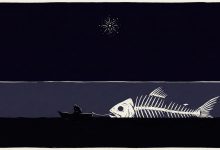
 admin
admin
 North Ward