
Beneath Hemingway’s spare, precise prose, you can sense something deeply human — a restless soul hungry for recognition, straining toward self-fulfillment, yet never quite able to break free from its own circling thoughts. In The Old Man and the Sea, Santiago pushes himself to the edge of human endurance. He refuses to surrender to fate. He catches his great fish. And yet — the sharks strip the flesh from the bones, leaving only a magnificent skeleton, and the old man returns to shore utterly spent. Does he feel satisfied? Perhaps for a moment. But the driving force behind his struggle was never really about the fish. It was the urge to prove something — to himself, and to the world....
First, be sincere. Second, be kind. Third, may we never forget one another.After closing The Brothers Karamazov, these words feel less like advice and more like a quiet vow. In a world torn between faith and doubt, reason and passion, they are the simplest truths the novel leaves in our hands. To live honestly, to treat others with mercy, and to remember each other—this, perhaps, is Dostoevsky’s final answer to the chaos of being human.
No other work affects me quite like Don Quixote. Every time I revisit it, I inevitably lose my composure. Cervantes died on April 23, 1616—coincidentally, the same day as Shakespeare—which is why we now have World Book Day. The first part of Don Quixote was published in 1605, the second part a decade later in 1615. Despite being over 400 years old, it’s widely recognized as the first modern novel. In this book, Cervantes created the “eternal Don Quixote,” a literary figure that transcends time. While Don Quixote himself is eternal, his companion Sancho Panza feels perpetually alive and relatable. As you read, this practical farmer often feels like someone you know—a relative, perhaps, or even yourself. What kind of...
 After Reading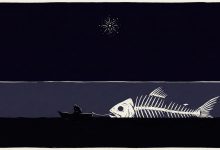
 admin
admin