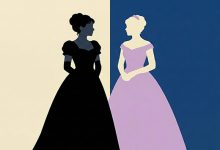
One Anna Karenina can beat ten relationship columns. The world will always have a Kitty—pure and sweet; a Dolly—kept afloat by everyday warmth; and an Anna—drunk on desire. Men are a roll of the dice, and so is marriage.
In 1856, the old Tsar Nicholas I ended his life by poison, and Alexander II came to the throne. The reforms of the new reign stirred fresh public interest in the Decembrist Uprising—the failed revolt that had greeted Nicholas I’s accession. Tolstoy, always suspicious of authority and its symbols, disliked this renewed fascination with “digging up old relics.” Turgenev, ten years his senior, scolded him sharply in a letter. That exchange, ironically, awakened Tolstoy’s own curiosity about the period. He began to imagine a novel about the Decembrists returning from exile. Yet he soon discovered that to reveal what those men believed, he would have to return to 1825 and write the uprising itself. And to write 1825, he would...
There are books that wait for us, and there are books we must wait for. One Hundred Years of Solitude taught me the difference. When reading becomes a struggle—when the words resist you, when the pages feel like walls—don’t force it. Don’t push yourself through a work that refuses to open itself to you. Don’t wrestle with sprawling narratives that seem deliberately chaotic, don’t strain to untangle generations of characters whose names echo and multiply across decades, don’t exhaust yourself distinguishing between José Arcadios and Aurelianos. These barriers exist for a reason. They are not defects in the book; they are messages from your unready self. They whisper: Not yet. Not now. I was in high school when I first...
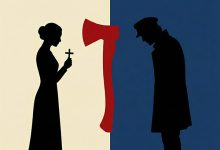
My first encounter with Russian literature was Dostoevsky’s Crime and Punishment. I powered through it in a fog, frantically copying down long passages and dialogues, still not quite getting it. The story follows a Russian university student who murders a pawnbroker landlady and her innocent sister, all because of his “louse theory”—the idea that extraordinary people can sacrifice a few insignificant “lice” to achieve their grand ideals. Even after killing two people and being sent to Siberia, the protagonist feels no remorse. To him, a couple of deaths mean nothing in service of his vision. Only when Sonya loves him does he find redemption. Her heart contains an infinite wellspring of life that awakens something in him. She helps him...
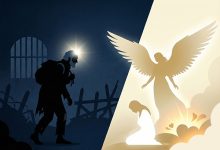
The night lay heavy and thick, without a trace of starlight. An old man reclined in his armchair, his snow-white hair like a brilliant lamp burning against the darkness. He struggled for breath, his body suffused with an indescribable pain. Death was drawing near, yet he felt no fear, for he could sense something burning hot beside him—that something was love. This old man was Jean Valjean, a “villain” who did good, a convict whose body housed a soul overflowing with compassion. Kind and generous, willing to destroy himself rather than harm his enemy, he saved those who had struck him down. Kneeling at the lofty altar of virtue, he transcended the mundane world and drew close to the angels....
In Dostoevsky’s masterpiece Crime and Punishment, Raskolnikov, a former law student living in extreme poverty, murders a pawnbroker and her sister. He commits the crime not out of hatred or simple greed, but to test a radical theory: whether certain people possess the right to kill others. After enduring severe psychological torment, he ultimately confesses, accepts legal punishment, and begins a path toward moral rebirth under the influence of Sonya. After finishing the novel, however, a troubling question arose in my mind:What if Raskolnikov had escaped both legal punishment and the judgment of his own conscience?What kind of person would he have become had his theory not collapsed from within? This question does not require speculation outside the text. In...
No matter how hard I try to stay balanced and self-aware, I still get anxious sometimes. When those moods hit, my go-to remedy is diving into the heavyweight stuff—Dostoevsky, Tolstoy, those massive books. I just finished rereading Anna Karenina. The masters always leave you with so much to feel, yet somehow words fail you. So here I am again, just rambling through whatever thoughts come to mind. There’s too much to say anyway. I read Anna Karenina once when I was little, skimmed it really. By the time Anna and Vronsky finally got together, I lost patience with the rest. I felt cheated—not even a kiss scene! But even then, I knew Tolstoy was something special, because that famous ball scene...
 After Reading
 North Ward