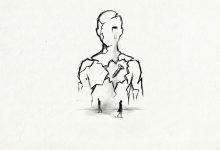
After Reading
“Freedom is the freedom to say that two plus two make four.”
— George Orwell, 1984
My father once taught me that some thoughts are better left unspoken—kept safely in your heart. I believe this is a profound truth, and perhaps the reason many of us still live peacefully in this world. Yet we all know the pain of suppressing our thoughts, unable to express them. Sometimes they slip out unintentionally, or explode at an unexpected moment. If this were the world of 1984, congratulations—you’ve just committed thoughtcrime. “Thoughtcrime does not entail death: thoughtcrime IS death.”
1984 depicts an era that exists nowhere in particular time or space, yet the novel has become something many politicians fear. Its dystopian vision repeats itself across different times and places, threatening to continue its tyranny into the future. But the book’s significance lies precisely in making people recognize the importance of freedom, thereby preventing the spread of totalitarianism. Whether under socialism, capitalism, imperialism, or communism, as long as leaders have an insatiable hunger for power, totalitarianism will never remain mere fantasy. And when people submit to such authority to protect themselves, totalitarianism will never disappear.
“BIG BROTHER IS WATCHING YOU.” This is the novel’s most frequently repeated and memorable line. Even in real life, we are constantly under surveillance. For security, for harmony, to combat obscenity and subversion—or perhaps these are not the real reasons at all. The truth is simply about controlling thought, nothing more. Thought—maybe many of us no longer need it. The world is filled with material desires and pleasures: pop music, Hollywood blockbusters, pornography, gourmet food, luxury goods, soap operas, and romance and fantasy novels to kill time. Thought has become an abandoned treasure, lost among concrete and advertisements. Totalitarianism? Why should we care about that? As long as I’m doing well, isn’t that enough? This attitude has become most people’s guiding principle. We navigate society’s turbulent waters just trying to protect ourselves, living day by day, seeking immediate pleasure, acting selfishly. Even if someone like Big Brother appeared, many would probably still enjoy their ignorant bliss. We wouldn’t have to endure the torment of independent thought. In our eyes, this isn’t submission—it’s another kind of thinking, a collective thinking, a controlled thinking, a thinking that rejects freedom and difference. And this is exactly what those in power want: obey and prosper, resist and perish. Perhaps we don’t need to imagine this future—perhaps it has already happened.
War is Peace
Freedom is Slavery
Ignorance is Strength
Returning to the beginning: freedom is the freedom to say that two plus two make four. Later, when Winston, unable to withstand torture, finally admits that 2+2=5, Radiohead’s song “2+2=5 (The Lukewarm)” seems to echo in my ears. The album containing this track, Hail to the Thief, might better be titled Hail to the Big Brother. “I’ll stay home forever, where two and two always makes a five.” While pop music endlessly sings about love and romance, Radiohead has already been recreating this classic work. “Don’t question my authority or put me in the dock” is clearly a satire of Big Brother and totalitarianism. And “I swat ’em like flies but like flies the buggers keep coming back” seems to allude to the tyranny of Big Brother—as persistent and irritating as the varicose veins above Winston’s ankle.
After finishing 1984, I thought of another film: V for Vendetta. The title isn’t quite accurate—it’s about revenge, yes, but more importantly, it’s about freedom and revolution. In this respect, it shares a lineage with 1984, depicting a dark, terrifying totalitarian political system, a politician whose large face always glares angrily, and countless persecuted and barely surviving people. The difference is that this film features a hero, V, who leads the people’s revolution. Ultimately, as the British Parliament explodes to magnificent symphonic music, people regain hope and freedom. As Natalie Portman’s character says: “He was Edmond Dantes. And he was my father…and my mother. My brother. My friend. He was you…and me. He was all of us.” V exists not merely as a hero or revolutionary fighter, but as a symbol of hope for freedom, allowing all thinking people to become V. It seems V is among us, yet sadly, existing only in film, he can only serve as a fantasy for us common people.
1984 is far more tragic. The revolutionary thoughts of ordinary people cannot escape assimilation under despotism. In the end, Winston willingly accepts death for Big Brother. Moreover, everyone in 1984 constantly monitors everyone else—sons spy on mothers, daughters watch fathers, reporting any hint of behavior against the Party. Family love and romantic love have vanished completely. This is not one person’s tragedy—it’s society’s tragedy. But it’s the victory of Ingsoc, the victory of Big Brother. Perhaps Big Brother doesn’t even exist; he cannot die. He merely guards against all impure thoughts, assimilating people into identical machines.
Facing the pressures of society, our thoughts are indeed being numbed by wave after wave of rules, just as Winston, under the impact of electric shocks, concentrates his attention and finally comprehends the truth that 2+2=5.
Yeah I love it, the attention
Paying Attention
Paying Attention
Paying Attention