After Reading
Anna’s psychological monologue before her death stands as one of the nineteenth century’s most extraordinary pieces of psychological writing. It’s difficult to imagine what state Tolstoy must have been in while composing these passages. The voice recording these sentences seems to belong to Anna herself—and if we consider Anna’s suicide as the novel’s climax, then the figure standing at this peak, surveying everything below, is not Tolstoy but Death itself.
The Shadow of Death
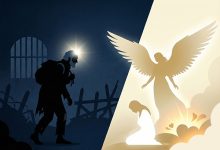
The shadow of death hovers over the entire novel from its opening pages. We first encounter it when Anna and Vronsky meet for the first time, at the scene of a railway suicide. This is followed by Anna’s brush with death during childbirth, then Vronsky’s failed suicide attempt, and later Nikolai’s agonizing death. Even Levin, Tolstoy’s autobiographical character, repeatedly contemplates ending his own life.
Once Anna makes her final decision, the novel’s pace suddenly accelerates, hurtling forward with the velocity of death itself, racing to meet the oncoming train. Anna wins her battle for love, but the price is the destruction of both body and soul. As one character remarks, even her death is that of “a godless, wicked woman”—she can never enter heaven.
The Pivotal Chapter: “Death”
Tolstoy gave Chapter 20 of Part Five a subtitle—perhaps the only subtitle in all his novels. That subtitle is simply: “Death.”
This chapter describes the death of Levin’s brother Nikolai. After the priest finishes his prayers and says “he is gone,” preparing to leave, the dying man suddenly emits a sharp, clear sound from deep in his chest:
“Not yet… soon.”
A minute later, his face brightens, and a faint smile appears beneath his mustache.
Nikolai had long been a fallen man, yet in his final moments he prayed frantically—though this was merely “a temporary, selfish manifestation of the delusion of recovery.” Nevertheless, death conquered him. Outwardly rough but inwardly submissive, he died with that slight smile.
This chapter, “Death,” appears roughly a quarter of the way through the novel’s second half. It functions as a fulcrum—from this position, it can lift the redemption and hope of the novel’s final sections to their highest point.
Life and Death Intertwined
At the very moment Nikolai dies, Levin’s wife Kitty becomes pregnant. Tolstoy isn’t suggesting reincarnation; rather, he wants to write about “death” more comprehensively, with greater tension. Writing only about death, without life, lacks dialectical balance.
Levin’s fear of death deepens when facing his brother’s passing, yet simultaneously, “he still felt he could not help but live and love. He felt that love had saved him from despair, and that this love, under the threat of despair, had become stronger and purer.”
The Gender Divide in Love
Perhaps this reflects the difference between men and women in that era. Men often treated love as a bridge to something beyond—whether metaphysical or material. Women, however, viewed love itself as the ultimate pursuit. This love might become highly abstract to fill spiritual voids, or swing to the opposite extreme. As Vronsky’s friend Serpukhovskoy observes: “We create great endeavors through love, but they are always practical about it.” Unfortunately, Anna belongs to the former category. In this misalignment of emotional needs, disappointment becomes inevitable.
“If he doesn’t love me but treats me tenderly out of duty, without the emotion I crave, that would be a thousand times worse than hatred!”
The Question of Female Redemption
Tolstoy didn’t grant his female characters the same desire and capacity for religious salvation that he gave his male ones. Rather than cruel, this seems more like stubbornness. Just as he himself pursued intellectual progress endlessly, he wanted Anna to plunge into the pursuit of love with similar abandon. From the beginning, Anna has a premonition of destruction—which is also a resolution. Before leaving, she says, “God, forgive me for everything!”
How does Tolstoy resolve this contradiction? He doesn’t condemn Anna’s pursuit of love or her subsequent actions, yet he leads her step by step toward destruction. The mainstream interpretation is that Tolstoy meant to reflect women’s tragic situation in that society. But if Tolstoy places salvation’s hope in religious faith, why doesn’t God help her in this moment?
I can imagine four possible explanations:
First, while Tolstoy sympathized with women, he remained fundamentally patriarchal, believing women neither needed nor could achieve salvation at the level of faith.
Second, this man who both “doubted tragedy and yearned for it” (as Harold Bloom notes) wanted to use a woman’s destruction for love to fulfill tragedy’s moral mission in aesthetics—though by traditional standards, a female protagonist still lacks a certain “height from which to fall.”
Third, this represents the weakness Lenin identified in essays like “Tolstoy and the Proletarian Struggle.”
Fourth, he held a naturalistic attitude toward Anna’s tragedy: some people must suffer, some cannot enter heaven, and some suffer without entering heaven—while others cannot afford to fall into degradation.
The Novel’s Dual Structure
Whatever the case, we cannot expect Tolstoy—this man who “experienced all of human life” (as Shklovsky put it)—to also find us a way out. That would make him God. The novel’s famous opening already acknowledges the world’s essential state: “All happy families are alike; each unhappy family is unhappy in its own way.” As Dylan Thomas wrote, “Death shall have no dominion”—similarly, neither happiness nor unhappiness can reign absolute.
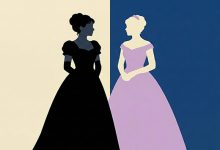
The novel follows two main storylines: Anna’s family moving toward tragic destruction, and Levin’s family gradually finding happiness. Like the bright and dark sides of a rotating moon, both grow according to the world’s rules, though with different outcomes.
These two storylines have minimal intersection and lack narrative momentum between them. They develop independently—you could almost separate them into two distinct novels. Anna and Levin meet only once, then scatter back to their respective happiness and unhappiness. Though they share a vague spiritual connection, it never creates resonance.
Beyond Causality
In “Narrate or Describe,” György Lukács compared the horse race scenes in Anna Karenina and Zola’s Nana, arguing that Tolstoy’s description serves a necessary narrative function while Zola merely describes for description’s sake. With Tolstoy’s superior intellect and narrative skill, creating connections between these two storylines shouldn’t have been difficult.
Yet these two threads show no hierarchy. They don’t illuminate or suggest each other but roll parallel along the heavy axle of the theme—one toward despair, one toward hope; one toward destruction, one toward redemption. This isn’t simple opposition between thesis and antithesis. Behind their relationship, which reason cannot penetrate, stands a hidden God. This creates tremendous artistic tension, and through this tension’s enormous energy, the theme can reach profound depths.
I believe Tolstoy deliberately avoided marking connections between the two storylines (as those who fear getting lost might do) because he transcended bourgeois consciousness in writing. In this sense, I understand why Proust said that in Balzac’s work “humanity is judged by a writer who wants to create a great work, while in Tolstoy’s work it is judged by a serene divinity.” Attempting to establish connections between the storylines—whether through narrative linkage or thematic contrast—would make redemption and destruction mutually explanatory, essentially transplanting causality. But what Levin finally realizes is that at the level of fate and faith, all this is “beyond reason.”
Two Great Art Forms in Balance
Anna’s story is a tragedy that inspires pity and fear. Levin’s story is a spiritual epic that brings courage and strength. Tolstoy balances two great art forms in the novel, allowing life’s truth to unfold naturally between them. As Lukács writes in The Theory of the Novel, Tolstoy yearned for:
“A life that nestles close to nature’s immortal rhythms, a life moving with nature’s pulse of birth and death, a life that has cast off the narrow, divided, separated, fragmented, rigid, unnatural forms.”
Thus the novel’s logic becomes nature’s logic, and the novel’s language becomes life’s language. It achieves this without relying on elaborate refinement. If Proust enriches the world’s sensory experience by distributing metaphors as generously as Santa Claus, Tolstoy is like a hunter using precise marksmanship to shoot down the illusions that language casts over the world. “Understanding how metaphorical his concept of nature is takes time, because his clear, simple style is rhetoric’s triumph” (Bloom).
Gorky said Tolstoy’s “aristocratic charm belongs to noble wildness.” Proust noted:
“Those vast scenes of harvesting, hunting, ice-skating in Anna Karenina stand like large clearings deliberately separating other sections, giving an impression of even greater spaciousness. Between two conversations of Vronsky’s, an entire summer seems to pass like a great green meadow needing to be mowed.”
The former powerfully summarizes; the latter demonstrates stunning perceptiveness. Together they mark Tolstoy’s natural character from both panoramic and detailed perspectives.
Unmatched Greatness
As for the novel’s status, tired of mainstream literary history’s evaluations, let’s hear from two proud men. Nabokov said in an interview: “I consider Anna Karenina the greatest work of literature in the nineteenth century.” Spengler declared: “Anna Karenina is unrivaled.”
Levin’s Spiritual Awakening
The novel concludes with Levin’s spiritual awakening. Through his personal life experiences, he realizes that his previous rational questioning of religion stemmed only from loneliness—and his loneliness came from lack of love. Levin finds peace and happiness in his own way.
Though some say Tolstoy’s novels contain “spiritual preaching that often becomes obsessed with absurd plot contrivances” (Thomas Mann), compared to Resurrection, these passages in Anna Karenina feel necessary and natural, more moving and convincing. Levin is Tolstoy’s autobiographical character, and this spiritual exploration represents Tolstoy’s own testimony. Yet when I remember that Tolstoy never achieved complete spiritual peace afterward, that he couldn’t resist continuing to struggle in both spirit and practice, I feel somewhat disappointed.
Is there truly no eternal refuge once and for all?
The Final Journey
He shattered the calm lake’s surface himself, then continued rowing with his large hands. At eighty-two years old, he resolutely broke with aristocratic life. To realize his ideals, he left home. On November 7, 1910, ten days after his departure, he died of pneumonia while traveling to southern Russia. Perhaps this spirit and action truly gives us the greatest strength and inspiration.
As Wittgenstein said: “He was a real human being and had the right to write.”