Crime and Punishment
This section focuses on Crime and Punishment by Fyodor Dostoevsky. We reflect on guilt, morality, conscience, and psychological conflict, exploring how this novel probes the darkest corners of the human mind.

My first encounter with Russian literature was Dostoevsky’s Crime and Punishment. I powered through it in a fog, frantically copying down long passages and dialogues, still not quite getting it. The story follows a Russian university student who murders a pawnbroker landlady and her innocent sister, all because of his “louse theory”—the idea that extraordinary people can sacrifice a few insignificant “lice” to achieve their grand ideals. Even after killing two people and being sent to Siberia, the protagonist feels no remorse. To him, a couple of deaths mean nothing in service of his vision. Only when Sonya loves him does he find redemption. Her heart contains an infinite wellspring of life that awakens something in him. She helps him...
In Dostoevsky’s masterpiece Crime and Punishment, Raskolnikov, a former law student living in extreme poverty, murders a pawnbroker and her sister. He commits the crime not out of hatred or simple greed, but to test a radical theory: whether certain people possess the right to kill others. After enduring severe psychological torment, he ultimately confesses, accepts legal punishment, and begins a path toward moral rebirth under the influence of Sonya. After finishing the novel, however, a troubling question arose in my mind:What if Raskolnikov had escaped both legal punishment and the judgment of his own conscience?What kind of person would he have become had his theory not collapsed from within? This question does not require speculation outside the text. In...
 After Reading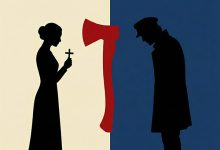
 North Ward