4 Articles
Tags :Philosophical fiction

War and Peace is so vast that I have to jot down my thoughts one by one, afraid I’ll lose myself in the labyrinth otherwise. Even then, these notes are just fragments, barely touching the surface of what this book contains. The Russian Who Knows Nothing There’s a passage in the novel that made me laugh out loud in bed at midnight. Tolstoy describes Pfuel as one of those hopelessly self-confident men, unchanging and ready to die for his beliefs—a type that can only be German, because only Germans derive such certainty from abstract ideas like science, from the illusion of possessing perfect truth. The French are self-assured because they believe themselves irresistibly charming to everyone, in both mind and...
In 1856, the old Tsar Nicholas I ended his life by poison, and Alexander II came to the throne. The reforms of the new reign stirred fresh public interest in the Decembrist Uprising—the failed revolt that had greeted Nicholas I’s accession. Tolstoy, always suspicious of authority and its symbols, disliked this renewed fascination with “digging up old relics.” Turgenev, ten years his senior, scolded him sharply in a letter. That exchange, ironically, awakened Tolstoy’s own curiosity about the period. He began to imagine a novel about the Decembrists returning from exile. Yet he soon discovered that to reveal what those men believed, he would have to return to 1825 and write the uprising itself. And to write 1825, he would...
My first encounter with Russian literature was Dostoevsky’s Crime and Punishment. I powered through it in a fog, frantically copying down long passages and dialogues, still not quite getting it. The story follows a Russian university student who murders a pawnbroker landlady and her innocent sister, all because of his “louse theory”—the idea that extraordinary people can sacrifice a few insignificant “lice” to achieve their grand ideals. Even after killing two people and being sent to Siberia, the protagonist feels no remorse. To him, a couple of deaths mean nothing in service of his vision. Only when Sonya loves him does he find redemption. Her heart contains an infinite wellspring of life that awakens something in him. She helps him...
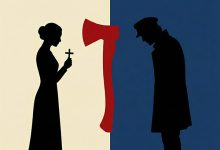
In Dostoevsky’s masterpiece Crime and Punishment, Raskolnikov, a former law student living in extreme poverty, murders a pawnbroker and her sister. He commits the crime not out of hatred or simple greed, but to test a radical theory: whether certain people possess the right to kill others. After enduring severe psychological torment, he ultimately confesses, accepts legal punishment, and begins a path toward moral rebirth under the influence of Sonya. After finishing the novel, however, a troubling question arose in my mind:What if Raskolnikov had escaped both legal punishment and the judgment of his own conscience?What kind of person would he have become had his theory not collapsed from within? This question does not require speculation outside the text. In...
 After Reading
 North Ward